Welcome to Our Compnay

 Send Email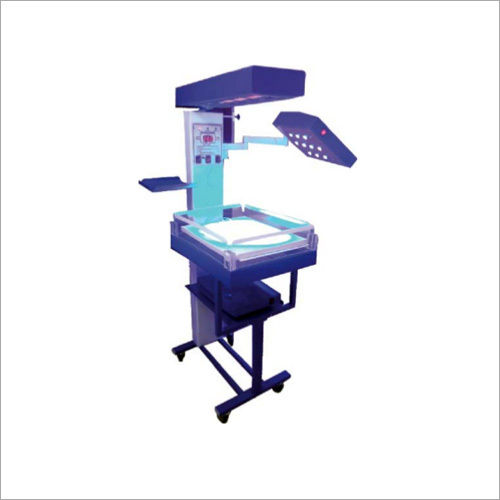
Infant Incubator
34000.00 INR
Product Details:
- Function Controlled temperature/humidity for neonatal care, easy observation and access, alarm system
- Weight Approx. 65 kg
- Storage Capacity 1 Infant (single occupancy)
- Power 400 W
- Automation Grade Automatic
- Material Powder-coated CRCA Steel body, Transparent Acrylic Hood
- Accuracy ±0.5°C temperature control accuracy
- Click to view more
X
Infant Incubator Price And Quantity
- 1 Piece
- 34000.00 INR
Infant Incubator Product Specifications
- Electric
- ±0.5°C temperature control accuracy
- Automatic
- Powder-coated CRCA Steel body, Transparent Acrylic Hood
- 400 W
- 1 Infant (single occupancy)
- Controlled temperature/humidity for neonatal care, easy observation and access, alarm system
- Approx. 65 kg
- Infant Incubator
- 40% to 80% RH
- 220V AC
- 25°C to 38°C (Room air to incubator mode)
- Thermal care for neonates
- White/Blue
- 50/60 Hz
- Digital
- Neonatal Intensive Care Units, Maternity Wards, Hospitals
- Maintains controlled environment for infants; temperature and humidity regulation; access ports for medical procedures
- Provide stable thermal environment for newborns
- Rectangular with rounded edges and transparent dome
- Newborns and preterm infants
- Single Phase
- LED digital display
- 1180 × 680 × 1250 mm
- Adjustable trolley height
- Air mode & baby mode selectable
- Last set program memory retention on power failure
- Removable tray for supplies and consumables
- Inbuilt humidity generator and automatic adjustment
- Inbuilt oxygen inlet provision
- Full-clear acrylic for 360-degree viewing
- Lockable wheels for mobility and stability
- 690 400 mm
- Optional (up to 2 hours)
- 6 access ports, hand access and tubing port for IV/respiratory lines
- Audio-visual alarms for temperature deviation, power failure, sensor failure
- 0-12 tilt adjustment
- Microprocessor based PID controller
- Quiet, low velocity fan with HEPA filter
Infant Incubator Trade Information
- Cheque
- 2-3 Days
- carton box
- All India
Product Description
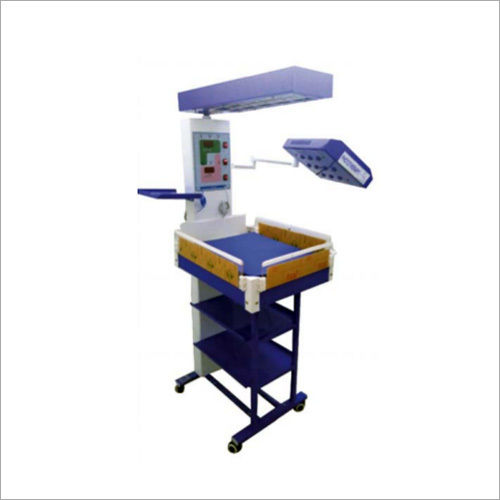
For many years, we have been offering this Hospital Radiant Heat Warmer with LED Photo Therapy in different specifications. The offered warmer is a heating device which is used for providing sufficient amount of heat to the body of infants. It has wheel base that helps in its easy movement. The main highlights of this warmer are strong construction, light weight, comfortable seat and excellent functioning. Hospital Radiant Heat Warmer with LED Photo Therapy has a transparent acrylic drop down and lockable side panel that protects the infant from rolling down.
Safety Feature
Sensor : Skin Sensor
Alarm : High Temp. audio visual
Power fail audio visual
Heater Cut off : Direct at set point
Display : 50mm LED Skin
Power Consumption : 750 Watt / 220 V Ac
Precision Thermal and Humidity Control
Utilizing a microprocessor-based PID controller, the incubator maintains stable temperatures and humidity essential for neonatal health. The integrated humidity generator ensures precise, adjustable humidity levels, while the HEPA-filtered air circulation safeguards the infant from airborne contaminants. These combined features create an ideal, consistent environment for fragile newborns and preterm infants.
Intuitive Operation and Safety Features
The incubator features a user-friendly digital LED display, audio-visual alarms for critical alerts, and program memory retention in case of power loss. With selectable Air and Baby operating modes and optional battery backup, the system supports uninterrupted care, ensuring both ease of use and enhanced patient safety for healthcare providers.
Versatile Access and Observation
Full-clear acrylic observation windows provide 360-degree visibility for monitoring infants, while six access ports and specialized hand/tubing outlets enable various medical interventions without disturbing the controlled environment. The adjustable infant bed tilt and lockable castors with a stable structure further support medical staff in delivering seamless neonatal care.
FAQs of Infant Incubator:
Q: How does the microprocessor-based PID controller enhance incubator performance?
A: The microprocessor-based PID controller ensures precise and stable temperature regulation within 0.5C. By continuously monitoring and adjusting the thermal environment, it creates optimal conditions for newborn and preterm infants, minimizing risks of temperature fluctuations.Q: What safety alarms are present to protect infants in the incubator?
A: The incubator features audio-visual alarms that promptly alert users in case of temperature deviation, power failure, or sensor malfunction. These alarms ensure immediate attention to any issue, enhancing infant safety and supporting quick staff response.Q: When should the inbuilt oxygen port be used?
A: The inbuilt oxygen inlet is used when medical protocols require supplemental oxygen for an infant. It allows seamless oxygen administration without compromising the incubators controlled environment, typically under doctors supervision in intensive care settings.Q: Where can this infant incubator be effectively deployed?
A: This incubator is optimally used in Neonatal Intensive Care Units (NICUs), maternity wards, and hospitalsanywhere continuous, controlled thermal and humidity regulation for newborns, especially preterm infants, is essential.Q: What processes are supported by the multiple access ports?
A: The six access ports, together with hand and tubing outlets, allow medical teams to perform essential procedures such as IV insertion, respiratory support, and monitoring without removing the infant or disrupting the stable environment.Q: How do healthcare providers benefit from the incubators adjustable features?
A: Providers benefit from adjustable bed tilt (012), trolley height, easy mobility via lockable castors, and the clear observation windowsfacilitating comprehensive care, rapid response to needs, and comfortable ergonomic access.Q: What are the main advantages of the humidification and air circulation system?
A: The inbuilt humidity generator with automatic adjustment and HEPA-filtered low-velocity fan maintain appropriate humidity levels and clean airflow, reducing infection risk and supporting optimal respiratory conditions for neonates.Tell us about your requirement

Price:
Quantity
Select Unit
- 50
- 100
- 200
- 250
- 500
- 1000+
Additional detail
Mobile number
Email

Other Products in 'Radiant Heat Warmer' category



Contact Details

- I-205, Sector-3, DSIDC, Bawana,Delhi - 110039, India
- Phone : 07971189170
X RAY ELECTRO MEDICARE CO.
GST : 07AAHPD4450E1Z5

- Mr Rajesh Dhingra (Proprietor)
- Mobile : 07971189170
- Send Inquiry
 Send Inquiry
 Send Inquiry
 Send SMS
X RAY ELECTRO MEDICARE CO.
All Rights Reserved.(Terms of Use)
Developed and Managed by Infocom Network Private Limited.
Developed and Managed by Infocom Network Private Limited.


